Professional Septic Services Built on 20+ Years of Trust
Explore a selection of the services we offer below. Please note that this is not an exhaustive list—if you need assistance with a project not mentioned here, don't hesitate to reach out. Give us a call today to discuss how we can meet your needs.

Septic Jetting

Hydro-jetting a septic system is essentially a high-pressure power wash for the underground pipes that run from a house to the septic tank, or from the tank to the drain field.
While a standard plumbing snake just punches a hole through a clog, jetting completely cleans the pipe walls. Here is a breakdown of how it works and why it is done:
How It Works
-
High-Pressure Water: A technician inserts a specialized hose with a multi-directional nozzle into the sewer line. It blasts water at pressures typically between 2,000 and 4,000 PSI (pounds per square inch).
-
Forward and Backward Jets: The nozzle has a forward-facing jet to blast through tough blockages, and rear-facing jets that propel the hose forward while scrubbing the inside walls of the pipe.
What It Clears Out
-
Sludge and Grease: Over time, cooking oils, soaps, and waste create a thick, gooey buildup (called scum or sludge) that narrows the pipe. Jetting flushes this entirely into the tank.
-
Tree Roots: Fine tree roots love to find small cracks in septic lines to drink the water. High-pressure jetting can actually slice right through these roots and clear the line.
-
Scale and Debris: It removes hard mineral deposits and packed-in debris that standard snaking leaves behind.
When Is It Needed?
Septic jetting is usually called in when a system is experiencing slow drains, frequent backups, or gurgling sounds in the pipes. It is also highly effective as preventive maintenance to restore a neglected system's lines back to "like-new" condition without having to dig them up and replace them.
Camera / Scope Septic Systems

A septic camera inspection (often called scoping the system) involves running a high-tech, flexible fiber-optic camera down the sewer lines to get a real-time, high-definition view of what is happening inside the underground pipes.
Instead of guessing what is causing a problem or digging up the yard to find a leak, this technology allows technicians to see the exact condition of the system from the inside out. Here is how it works and why it is used:
How It Works
-
The Equipment: A push-rod with a rugged, waterproof camera on the tip is fed into the cleanout pipe or the septic tank inlet.
-
Real-Time Feed: The camera transmits a live video feed to a monitor viewed by the technician. Many modern setups include a digital foot counter so the technician knows exactly how many feet into the pipe the camera is.
-
Location Tracking: The camera head usually contains a built-in transmitter (called a sonde). If the technician spots a major issue, they can use a locating device above ground to pinpoint the exact spot on the lawn where the camera is sitting, minimizing the need for digging.
What It Detects
-
Pipe Damage: It easily spots cracked, collapsed, offset, or sagging pipes (often called "bellies" where water pools).
-
Tree Root Intrusion: It identifies exactly where roots have penetrated pipe joints.
-
Blockages: It reveals the cause of a clog, whether it is a buildup of flushable wipes, grease, or a foreign object.
-
System Age & Material: It determines if the pipes are made of outdated materials like Orangeburg (tar paper) or cast iron that may be failing due to age.
When Is It Needed?
-
Real Estate Inspections: It is highly recommended (and often required) when buying or selling a home to ensure the buyer isn't inheriting a failed underground system.
-
Frequent Backups: If a line keeps clogging even after being snaked, a camera will show why the clog keeps returning.
-
Before Hydro-Jetting: Technicians often scope a line first to make sure the pipe is structurally sound enough to handle high-pressure water jetting.
Effluent Filter Service & Installation

An effluent filter service and installation involves placing a specialized, fine-mesh filter into the outlet tee of a septic tank to catch small solids before they can escape into the drain field.
Think of it as the ultimate insurance policy for a septic system. While the tank naturally separates solids, tiny particles of lint, hair, and debris can sometimes float out. An effluent filter stops them in their tracks, preventing the drain field from clogging and failing.
Here is how the service, installation, and maintenance work:
The Installation Process
-
Accessing the Outlet: The technician locates the outlet side of the septic tank (the side leading to the yard/drain field) and removes the access riser lid.
-
Retrofitting the Tee: If the tank has an older concrete or clay baffle, the technician will often replace or retrofit it with a modern PVC plastic T-pipe.
-
Securing the Filter: The effluent filter cartridge is securely slid inside this PVC tee. It sits right in the path of the exiting wastewater, catching any suspended debris larger than a fraction of an inch.
The Maintenance (Filter Cleaning)
Effluent filters are highly effective, which means they will get dirty and eventually restrict water flow if neglected.
-
Regular Rinsing: As part of a routine maintenance program (typically every 6 to 12 months, or during a standard tank pumping), the filter needs to be pulled out and sprayed down.
-
The Process: The technician pulls the filter out, uses a garden hose to rinse the trapped gunk back into the septic tank (never onto the lawn), and slides it back into place.
Why It Is Crucial
-
Protects the Drainfield: Replacing a clogged PVC pipe is cheap; replacing a failed, biomat-clogged drainfield can cost tens of thousands of dollars. The filter keeps the drainfield soil clean and porous.
-
Acts as an Early Warning System: If an effluent filter clogs because it hasn't been cleaned, water will back up into the house's lowest drains. While annoying, this backup is a safe warning sign that tells the homeowner to service the filter before the expensive drainfield gets ruined.
Septic Pump / Alarm Installation & Service

While traditional systems rely entirely on gravity to move wastewater, homes with uphill drain fields or advanced treatment setups require an electric pump to push effluent where it needs to go, alongside an alarm system to warn the homeowner if that pump fails.
What the Service Involves
-
Septic Pump Installation & Replacement: Replacing a burnt-out or aging submersible pump (usually a heavy-duty effluent or sewage ejector pump) inside the pump chamber.
-
Alarm System Setup: Installing an indoor/outdoor warning panel connected to a float switch in the tank. If the water level rises too high, the alarm triggers a loud buzz and a flashing red light.
-
Float Switch Adjustment & Service: Testing and replacing the mechanical floats that tell the pump when to turn on, when to turn off, and when to trigger the alarm.
The "Why It Matters" (The Value Proposition)
Homeowners are often terrified of mechanical failure because it can lead to immediate backups. The description should focus on peace of mind and protection:
-
Prevents Catastrophic Backups: A failing pump means wastewater has nowhere to go but back up into the house. A properly installed pump keeps the system flowing seamlessly.
-
Early Warning Insurance: The alarm doesn't mean the house is flooding right now; it means the pump has stopped working and the tank is using its emergency reserve capacity. This gives the homeowner a 24-to-48-hour window to call for service before a disaster happens.
Bulleted Signs the Customer Needs Help
Adding a quick checklist helps the customer self-diagnose and encourages them to call immediately:
-
The red light on the septic alarm box is flashing or a buzzer is sounding.
-
Drains in the basement or lowest level of the home are sluggish or backing up.
-
The circuit breaker for the septic pump keeps tripping.
-
The pump is running constantly without shutting off, or making unusual humming noises.
Repairing & updating Septic Clean Outs

A septic cleanout repair and upgrade service focuses on fixing or modernizing the accessible pipe openings that connect a home's plumbing to the septic tank.
Cleanouts are the primary access points used by technicians to clear clogs, run camera inspections, or hydro-jet lines. When they are broken, buried, or improperly sealed, they can cause major structural and environmental issues.
Here is a breakdown of what this service involves and why it is essential.
What the Service Involves
-
Locating and Excavating: Finding older, buried cleanout pipes that were covered by landscaping, dirt, or concrete over the years.
-
Extending to Grade (Upgrading): Bringing short, buried pipes up to ground level by adding PVC extensions. This ensures they are easily accessible in an emergency without digging up the lawn.
-
Replacing Damaged Pipes: Cutting out old, cracked cast iron, clay, or brittle PVC cleanout tees and replacing them with durable, modern schedule-40 PVC.
-
Installing Airtight Caps: Replacing missing, broken, or threaded caps with secure, heavy-duty, watertight caps to seal the system.
Why It Is Crucial (The Value Proposition)
A broken or buried cleanout is a hidden liability. Upgrading them provides several major benefits:
-
Prevents Emergency Delays: If a sewage backup happens at 2:00 AM, a technician cannot help if they have to spend two hours digging blindly in the dark to find the cleanout. Exposed, up-to-grade cleanouts mean instant service.
-
Keeps Out Debris and Pests: A cracked or uncapped cleanout allows dirt, rocks, and rainwater to pour into the septic tank, overloading the system. It also invites rodents and insects into the sewer lines.
-
Stops Lawn Mower Damage: Older cleanouts often have fragile caps that sit just an inch above the grass—making them prime targets for lawn mowers. Technicians can install flush-to-ground, durable traffic caps that can be safely run over.
-
Eliminates Foul Odors: A broken cap allows sewer gases to escape right into the yard, creating embarrassing odors near patios or walkways.
Bulleted Signs the Customer Needs This Service
-
The plastic cap on the yard pipe is cracked, missing, or shattered by a lawn mower.
-
The homeowner has no idea where the cleanout pipe is located in the yard.
-
Foul, sewage-like odors are noticeable in specific areas of the lawn.
-
Dirt or grass keeps falling into the pipe opening.
Service Mound Systems & Pumps

Above-ground mound systems are highly specialized, engineered setups designed for challenging soil conditions. Because they rely entirely on a dosing pump to push wastewater upward into the distribution bed, a single pump or float failure can jeopardize your entire yard.
We specialize in servicing the advanced mechanical components of mound systems. From testing and replacing dosing pumps to flushing out clogged distribution manifolds, our family ensures your mound receives the exact, controlled dosing it needs to operate safely and efficiently for years to come.
What the Service Involves
-
Mound Dosing Pump Service: Inspecting, testing, and replacing the heavy-duty submersible effluent pump that forces wastewater up into the mound network.
-
Pressure Manifold Flushing: Cleaning the internal distribution pipes (the manifold) inside the mound. Over time, solids or bacterial slime can clog the small perforation holes, leading to uneven distribution.
-
Float Switch Calibration: Testing the control floats that regulate the exact volume of water pumped into the mound per dose, ensuring the sand layer doesn't get flooded.
-
Mound Vegetation & Soil Inspection: Checking the physical mound for signs of erosion, compacted soil, or improper plant growth (like deep tree roots) that could compromise the system.
Why It Is Crucial
Mound systems are among the most expensive septic setups to install or replace. Protecting that investment is the top priority for the homeowner:
-
Prevents Mound "Blowouts": If the dosing pump or float switches miscalculate and send too much water at once, the mound can become oversaturated, causing raw sewage to breakout or "blow out" the side of the hill.
-
Ensures Even Distribution: If half of the pipes inside the mound are clogged with scale or slime, the remaining half takes double the workload. This localized overloading causes early system failure.
-
Extends System Lifespan: Regular flushing and pump checkups keep the sand filtering layer working efficiently for decades, saving the homeowner from an incredibly costly backyard reconstruction.
Signs that Your Mound Needs Service
-
Water is pooling or creating soft, spongy, or unusually green spots on or around the base of the mound.
-
The septic alarm box is buzzing, or the red warning light is illuminated.
-
Lush, dark green grass is growing rapidly on the mound compared to the rest of the yard.
-
Sewage odors are noticeable near the mound area.
Install & Service Holding Tanks & Alarms

When a traditional drain field isn't an option for your property, a professionally installed holding tank is the ultimate solution for safe wastewater management. Because these tanks rely entirely on regular pump-outs, a dependable alarm system is your frontline defense against backups.
Our family specializes in the precision installation of heavy-duty holding tanks and early-warning alarm systems. From replacing faulty float switches to inspecting tank integrity, we ensure your system remains secure, watertight, and completely worry-free.
What the Service Involves
-
Tank Installation & Upgrades: Excavating and installing heavy-duty concrete or poly holding tanks engineered to withstand underground pressure and prevent leaks.
-
Fail-Safe Alarm Installation: Wiring indoor/outdoor audio and visual alarm systems connected to internal float switches.
-
Float and Sensor Maintenance: Testing, cleaning, and replacing the mechanical float switches that trigger the alarm when the tank reaches capacity.
-
Sealing and Inspection: Checking structural integrity, lids, and risers to ensure groundwater isn't leaking into the tank, which would cause it to fill up prematurely.
Why It Matters
For holding tank owners, management is all about timing.
-
Prevents Disastrous Backups: When a holding tank is full, it's full. There is zero emergency overflow capacity. A properly calibrated alarm gives the homeowner a vital heads-up to schedule a pump-out before sewage backs up into the home.
-
Environmental & Legal Compliance: Holding tanks must be perfectly watertight to prevent raw sewage from contaminating local groundwater. Professional installation and servicing ensure the property stays compliant with local environmental regulations.
-
Optimizes Pumping Schedules: A well-maintained sensor system ensures homeowners aren't calling the pumper too early (wasting money) or too late (risking a backup).
Signs That You Needs Service
-
The holding tank alarm buzzer is sounding or the red warning light is active.
-
The tank seems to be filling up much faster than usual (a sign of a stuck float or groundwater intrusion).
-
Foul odors are escaping from around the holding tank lid or yard area.
-
Drains inside the home are starting to gurgle or slow down.
Soil Testing

A septic soil test (commonly known as a perc test or percolation test) is the absolute first step in designing or replacing a septic system.
Before any tanks can be buried or drain fields mapped out, a certified soil tester must evaluate how quickly the native soil absorbs water and where the local water table sits. If the soil can't filter wastewater properly, the system will fail, contaminating the environment and causing property damage.
What the Service Involves
-
Site Evaluation & Excavation: A technician digs test pits (usually several feet deep) using an excavator to analyze the different layers of soil (sand, clay, silt) and check for shallow bedrock.
-
Water Table Mapping: Determining the high-water mark of the seasonal water table to ensure the drainfield sits safely above it.
-
System Design Reporting: Submitting the official soil logs to local county or state regulators to determine exactly what type of system your lot legally requires (e.g., a conventional gravity system versus an above-ground mound system).
Why It Is Crucial
Soil testing isn't just a legal hoop to jump through; it is the blueprint for the entire project:
-
Dictates System Type & Cost: You cannot guess what kind of septic system a property needs. The soil test decides whether you can install a budget-friendly conventional drainfield or if you need a more advanced holding tank or mound system.
-
Legal Compliance & Permitting: Local municipalities will not issue a building or sanitary permit without a certified soil report on file.
-
Prevents Future System Failure: Testing ensures your drainfield is matched perfectly to your soil's natural absorbing capacity, preventing premature clogs, pooling water, and foul backyard odors down the road.
When Is a Soil Test Needed?
-
New Home Construction: Before building a home on a lot without municipal sewer access.
-
System Replacement: When an older, existing septic system has failed and a new drainfield must be engineered.
-
Home Additions: If you are adding bedrooms to a house, local code often requires a new soil test to verify the existing ground can handle the increased wastewater load.
Install & Service Conventional at Grade Septic Systems

A conventional, below grade septic system installation and service focuses on the most traditional, common, and budget-friendly type of septic system.
Unlike mound or holding systems, a conventional system relies completely on gravity and the natural filtering power of the existing soil. It consists of a standard septic tank and a series of underground trenches (the drain field) dug into the native dirt. It is called "at-grade" or "conventional gravity" because wastewater flows downward naturally without needing electrical pumps.
What the Service Involves
-
System Design & Layout: Mapping out the exact location, depth, and length of the drainfield trenches based on the property's layout and soil test results.
-
Excavation & Tank Installation: Digging the pit and setting the heavy concrete or poly septic tank perfectly level so gravity can do its job.
-
Drainfield Construction: Digging the lateral trenches, laying down perforated distribution pipes, and surrounding them with washed gravel or installing modern gravel-less chamber systems.
-
Routine Inspections & Service: Checking sludge levels in the tank, inspecting the inlet and outlet baffles, and ensuring wastewater is distributing evenly across all trenches.
Why It Is Important
Because conventional systems are buried completely underground and have no mechanical parts, they are easy to forget—which makes proper installation and routine checkups even more vital:
-
Most Cost-Effective Option: If a property's soil qualifies for a conventional system, it is the least expensive system to install and maintain because it requires zero electricity, pumps, or specialized sand mounds.
-
Long-Term Longevity: When installed correctly by experienced professionals, a conventional gravity drainfield can last for decades without needing major interventions.
-
Proactive Protection: Routine service ensures that solid waste never escapes the tank and flows into the trenches. Once solids enter a conventional drainfield, they clog the soil pores, which can ruin the yard and require a complete system replacement.
Signs that you need Service
-
Water is pooling or creating mushy, wet patches over the drainfield area in the yard.
-
Gurgling sounds are coming from the toilets or drains when water is running.
-
Sewage odors are noticeable outside near the tank or drainfield, especially after heavy rains.
-
It has been more than 3 to 5 years since the septic tank was last inspected or serviced.
New Well Hookups

A new well hookup service focuses on the critical connection point where a property’s fresh water supply meets its delivery system.
Once a well drilling company finishes drilling a new well, they typically leave a bare casing pipe sticking out of the ground. A septic and excavation specialist is then brought in to dig the trenches, install the underground water lines, hook up the pumping components, and route the water safely into the home or commercial building
What the Service Involves
-
Trenching and Excavation: Digging a deep trench from the well casing to the building’s foundation. This trench must be dug well below the local frost line to ensure the water lines never freeze during winter.
-
Pitless Adapter Installation: Installing a specialized, weld-less brass fitting (called a pitless adapter) into the side of the underground well casing. This allows the water line to exit the well horizontally underground, keeping the connection safe from freezing temperatures and surface contamination.
-
Water Line Routing: Running heavy-duty poly water lines and electrical conduit from the well casing through the foundation wall and into the utility room.
-
Pressure Tank & Control Setup: Installing and calibrating the indoor water pressure tank, pressure switch, and control box that automatically tell the well pump when to turn on and off based on household water usage.
Why It Is Crucial
A flawless well hookup is the difference between reliable plumbing and expensive, frozen-pipe emergencies:
-
Total Freeze Protection: By utilizing precision excavation and high-quality pitless adapters, the entire water delivery network remains buried safely below the frost line, ensuring uninterrupted water flow even in sub-zero temperatures.
-
Sanitary Water Protection: The hookup must be perfectly airtight and watertight. Proper sealing prevents dirt, insects, fertilizers, and surface runoff from leaking into the well casing and ruining the drinking water supply.
-
Optimized Water Pressure: Correctly sizing and plumbing the indoor pressure tank ensures the home experiences strong, consistent water pressure across all showers and appliances without burning out the well pump prematurely.
When Is This Service Needed?
-
New Construction: Connecting a freshly drilled well to a brand-new home build.
-
Well Upgrades: Converting an old, outdated well pit system into a modern, sanitary pitless adapter setup to meet updated building codes.
-
Line Replacements: Excating and replacing older, leaking underground water lines between an existing well and the house.
Well Pump Replacement & Repairs

A well pump replacement and repair service focuses on the mechanical system that physically extracts water from an underground aquifer and pushes it into a home.
When a well pump fails, a property instantly loses all running water. Because these pumps operate deep underground—either submerged at the bottom of the well casing or mounted inside a basement utility room—diagnosing and fixing them requires specialized electrical and mechanical expertise.
What the Service Involves
-
Submersible Pump Replacement: Pulling up hundreds of feet of pipe and electrical wiring from deep within the well casing to swap out a burned-out submersible motor with a new, energy-efficient model.
-
Electrical Troubleshooting: Testing the control box, capacitors, and thermal overloads to determine if the issue is a simple electrical failure or a dead pump motor.
-
Check Valve Replacement: Installing new one-way check valves to prevent water from draining backward out of the home and into the well when the pump turns off.
-
Constant pressure well system (also known as a variable frequency drive or VFD system) is a modern upgrade to a traditional well setup.
Pressure Tank Replacement & Repairs

A pressure tank replacement and repair service focuses on the indoor component that manages water storage and regulates water pressure throughout a home.
While the well pump physically pulls water out of the ground, the pressure tank is what keeps that water under constant pressure. It uses a compressed air bladder to push water through the home's pipes so the well pump doesn’t have to turn on every single time a faucet is opened. When a pressure tank fails, it places massive strain on the well pump, leading to premature pump burnout.
What the Service Involves
-
Pressure Tank Replacement: Disconnecting and removing a rusted, waterlogged, or ruptured tank and installing a modern, heavy-duty pre-charged bladder tank.
-
Pressure Switch Testing & Replacement: Servicing the electrical switch that tells the well pump when to turn on (usually when pressure drops to 30 or 40 PSI) and when to shut off (usually at 50 or 60 PSI).
-
Air Bladder Pressure Adjustment: Testing and calibrating the air pressure (PSI) inside the tank's bladder to ensure it matches the well pump's switch settings perfectly.
-
Component Upgrades: Replacing crucial connected parts like the pressure gauge, brass tank tee, boiler drain valve, and the emergency pressure relief valve.
Why It Is Crucial
A properly functioning pressure tank is the primary protector of a well pump. Servicing or replacing a failing tank saves homeowners from much more expensive repairs:
-
Prevents Well Pump Burnout: If a pressure tank loses its air charge, the pump will "short-cycle"—turning on and off rapidly every few seconds. This quickly destroys the well pump motor, turning a standard tank fix into a costly emergency pump replacement.
-
Delivers Consistent Water Pressure: A healthy tank ensures steady water flow through showers, appliances, and faucets, eliminating frustrating drops or sudden surges in pressure.
-
Provides a Ready Water Reserve: The tank holds a reserve of pressurized water, meaning the pump gets to rest between uses, lowering electrical bills and extending the lifespan of the entire system.
When Service is Needed
-
Clicking Sounds: The pressure switch near the tank can be heard clicking rapidly on and off while water is running.
-
Fluctuating Water Pressure: Water flows normally for a brief moment, drops to a weak trickle, and then suddenly surges back up.
-
Sputtering Faucets: Air is trapped in the plumbing lines, causing faucets to "spit" or blast out pockets of air.
-
Short-Cycling Pump: The outdoor well pump can be heard kicking on frequently, even when very little water is being used.
Updating existing well non-compliance issues

Updating existing well non-compliance issues service focuses on modifying, repairing, or reconstructing older well systems so they meet modern environmental, safety, and local sanitary building codes.
Many older wells were constructed under outdated regulations. When a property changes hands, undergoes a major renovation, or when a routine inspection reveals a hazard, these code violations must be corrected legally. Non-compliant wells pose a major risk of introducing bacteria, pesticides, and surface runoff directly into the underground drinking water supply.
What the Service Involves
-
Well Cap Upgrades: Replacing old, loose, or non-vented caps with modern, vermin-proof, watertight sanitary well caps to block bugs, earwigs, and surface water from entering the casing.
-
Casing Extensions: Extending the steel or plastic well casing so it stands at least 12 inches above the final ground grade, preventing heavy rainfall or floodwaters from spilling over the top.
-
Well Pit Elimination: Filling in old, dangerous underground "well pits"—which are highly prone to flooding and collecting toxic gases—and converting the system to a modern, above-ground casing setup using a pitless adapter.
-
Setback Correction: Addressing issues where a well is legally too close to newer structures, such as being within the mandatory setback distance from a newly installed septic drainfield, driveway, or building foundation.
Why is this important
-
Bringing a well into compliance protects both the physical health of the family and the financial health of the property owner:
-
Secures Property Sales: Real estate transactions frequently stall when a home inspector flags a non-compliant well. Resolving these issues quickly ensures mortgage approvals and property transfers go through smoothly.
-
Guarantees Safe Drinking Water: Eliminating structural defects like unsealed well pits or cracked caps stops coliform bacteria, nitrates, and surface pollutants from contaminating the tap water.
-
Avoids Municipal Fines: Correcting flagged violations keeps property owners compliant with county health departments and state natural resource regulations, avoiding costly penalties.
Common Signs of a Non-Compliant Well System
-
The well head is completely buried underground or hidden inside a concrete pit.
-
The well cap is made of loose concrete, a makeshift coffee can, or unsealed plastic.
-
Water tests persistently come back positive for total coliform or E. coli bacteria despite shock chlorination treatments.
-
The well casing sits in a depression where rainwater pools during heavy storms.
Real Estate Well Inspections & Testing

A real estate well inspection and testing service is a specialized diagnostic evaluation performed during property transactions to ensure the water supply is safe, functional, and legally compliant before closing.
When buying or selling a home with a private well, mortgage lenders (especially VA, FHA, and USDA loans) and local health departments almost always require proof that the well produces a sufficient volume of water and that the water is completely free of harmful contaminants.
What the Service Involves
-
Visual Structural Inspection: Checking the physical condition of the visible well components, including the well cap, casing, electrical conduit, and surrounding ground slope to ensure surface water cannot pool and leak into the well.
-
Functional Flow & Yield Testing: Running a continuous flow test (usually for 1 to 4 hours) to measure the well’s yield in gallons per minute (GPM). This confirms the well recovery rate can keep up with daily household demands without running dry.
-
Water Quality Sampling: Collecting water samples directly from the source to test for the "loan closer" parameters. This standard panel typically checks for coliform bacteria, E. coli, nitrates, nitrites, lead, and sometimes arsenic or copper depending on local regulations.
-
Equipment Performance Assessment: Evaluating the baseline operation of the pressure tank, pressure switch, and control box to ensure the mechanical system isn't on the verge of failure.
Why It Is Crucial (The Value Proposition)
A real estate well inspection removes the financial blind spots of purchasing a rural or unmunicipalized property:
-
Protects the Buyer’s Investment: Replacing a failed well pump, a ruptured pressure tank, or drilling a brand-new well can cost thousands of dollars. An inspection catches these issues before the buyer signs the closing papers, allowing them to negotiate repairs or price drops with the seller.
-
Satisfies Lender Requirements: Most underwriters will completely halt a home loan if a certified well water report is missing or if the water test fails. A professional inspection provides the official documentation needed to clear the underwriting process.
-
Guarantees Immediate Health Safety: It ensures that the first glass of water a family drinks in their new home won't expose them to invisible, hazardous contaminants like nitrates or bacteria.
Common Red Flags Flagged During Transactions
-
Low Yield: A well producing less than 3 to 5 gallons per minute, which may require installing a costly secondary storage system to manage peak household usage.
-
Buried Well Heads: Older wells with casings cut off below the ground surface, which are non-compliant with modern codes and highly susceptible to surface runoff contamination.
-
Failed Water Tests: High nitrate levels (often from agricultural runoff) or positive bacteria counts that require immediate shock chlorination or the installation of specialized water treatment equipment before a loan can close.
Well Water Testing & Chlorination

A well water testing and chlorination service focuses on diagnosing the biological and chemical health of a private water supply and performing a deep-clean shock treatment to eliminate harmful contaminants.
Unlike municipal water, which is constantly monitored and treated by the city, private well owners are entirely responsible for their own water safety. Routine testing ensures the water is free from invisible hazards, while shock chlorination acts as a powerful reset button for a well's ecosystem.
What the Service Involves
-
Comprehensive Water Sampling: Collecting sterile water samples directly from the well head and indoor fixtures to test for coliform bacteria, E. coli, nitrates, arsenic, lead, iron, and hardness levels.
-
Lab Analysis Coordination: Submitting samples to a state-certified laboratory for official analysis, providing the homeowner with a detailed breakdown of their water quality.
-
Shock Chlorination Treatment: Calculating and introducing a highly concentrated liquid or pellet chlorine solution directly into the well casing to thoroughly disinfect the entire system.
-
System Flushing & Recirculation: Circulating the chlorinated water through the well, pressure tank, and every indoor plumbing line until a strong chlorine odor is present, letting it sit for 12 to 24 hours to kill all bacteria and bio-films, and then completely flushing the system until the water runs pure and chemical-free.
Why is it important
Water testing and chlorination are the frontline defense against waterborne illnesses and structural plumbing damage:
-
Identifies Invisible Threat: Many dangerous contaminants—such as coliform bacteria, nitrates, and arsenic—are completely odorless, tasteless, and invisible. Regular testing is the only definitive way to know if water is safe to drink.
-
Eliminates Harmful Bacteria: Shock chlorination completely eradicates harmful bacterial colonies, including E. coli and iron/sulfur-reducing bacteria, ensuring the water meets strict public health standards.
-
Removes Odors and Slime: Chlorination destroys nuisance bacteria that cause a rotten-egg smell (hydrogen sulfide) or leave a slimy, orange buildup inside toilet tanks and fixtures, restoring fresh taste and clear water.
When Is This Service Needed?
-
Annual Maintenance: Health departments recommend testing private wells at least once a year for bacteria and nitrates.
-
Positive Bacteria Test: Anytime a routine water test flags the presence of total coliform or E. coli.
-
System Openings & Repairs: Immediately after a well pump replacement, well casing extension, or any plumbing work where the sealed well cap was removed and exposed to the open air.
-
Environmental Events: Following heavy local flooding, prolonged torrential downpours, or if a nearby septic system fails.
Real Estate Septic Inspections
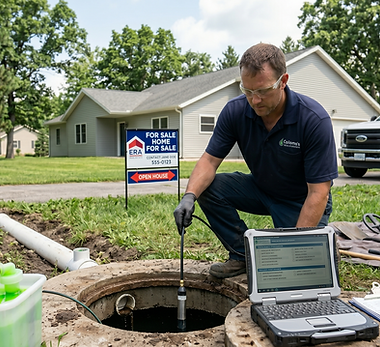
A real estate septic inspection is a specialized evaluation of an on-site wastewater treatment system performed during a property transaction.
Because repairing or replacing a failed septic system is one of the most expensive hidden costs a property buyer can face, mortgage lenders (including FHA, VA, and USDA loans) and local health departments frequently require a certified septic inspection report before a home sale can close. The inspection confirms that the system can safely handle the household's wastewater load and complies with environmental health regulations.